How an 8-Figure Brand Cut CPA 37% in Q4
A Performance Breakdown from Lifeboost Coffee

In a previous post, we focused on the creative process. We broke down how a Kreator.ai generated ad was conceived, refined, and structured, and why judgment matters more than prompts.
This time, we are shifting the lens. Process is important, but performance is proof.
Q4 exposes creative weaknesses quickly. As competition intensifies and CPMs rise, marginal differences in engagement translate into meaningful differences in cost efficiency. Prospecting campaigns feel this pressure most acutely. Cold audiences are less forgiving. Weak hooks are punished quickly.
We wanted to evaluate whether a cinematic AI-generated creative could perform under those conditions. Not in isolation or in a controlled test account, but in live cold acquisition during the most competitive stretch of the year.
The Campaign Context
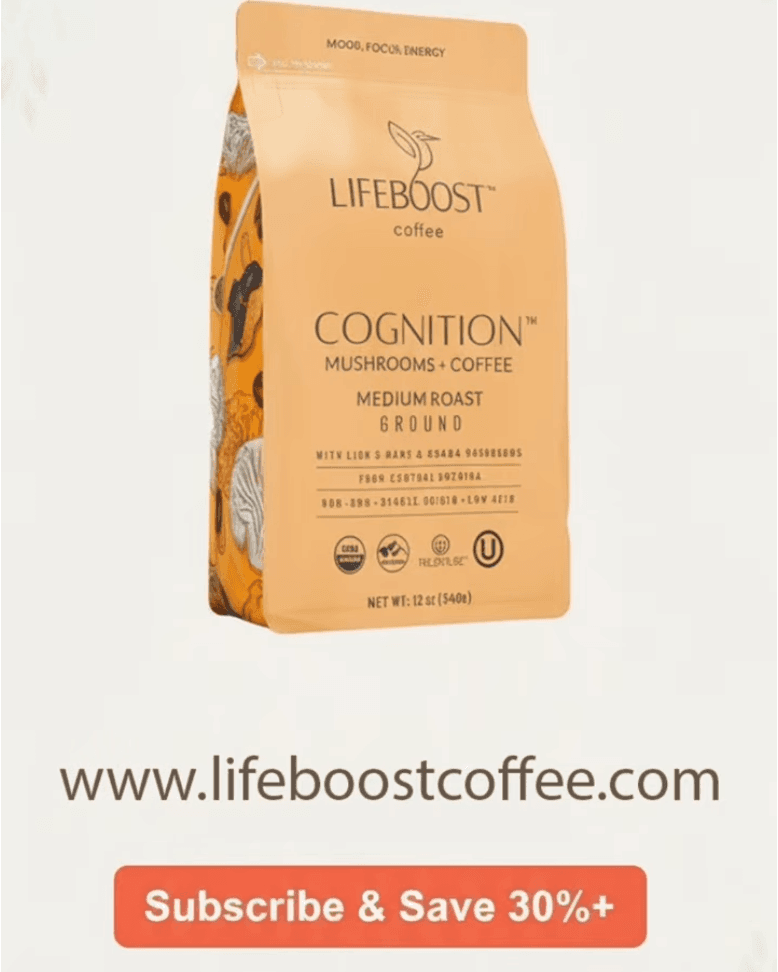
The creative centered on a high-performing professional who loves her coffee enough to bring it with her anywhere, even to a remote setting like the African savanna. The concept was built inside Kreator.ai and deployed within an active Meta advertising account.
This was not a retargeting campaign. All existing customers were excluded, and the ad ran in open targeting. In practical terms, this was true cold acquisition traffic.
Total spend reached $11,373. That level of spend moves the campaign beyond early volatility and into stable signal. If performance had degraded, budget would not have continued.
The creative was originally introduced as a test. The goal was to determine whether a cinematic AI-produced concept could compete inside a growing account.
It did more than compete and is still running today.
The performance was not accidental. The structure was built intentionally to secure attention early, escalate tension, deliver clarity quickly, and anchor credibility before expanding the narrative. The numbers reflect that structure under pressure, not novelty.
Overall Performance at Scale
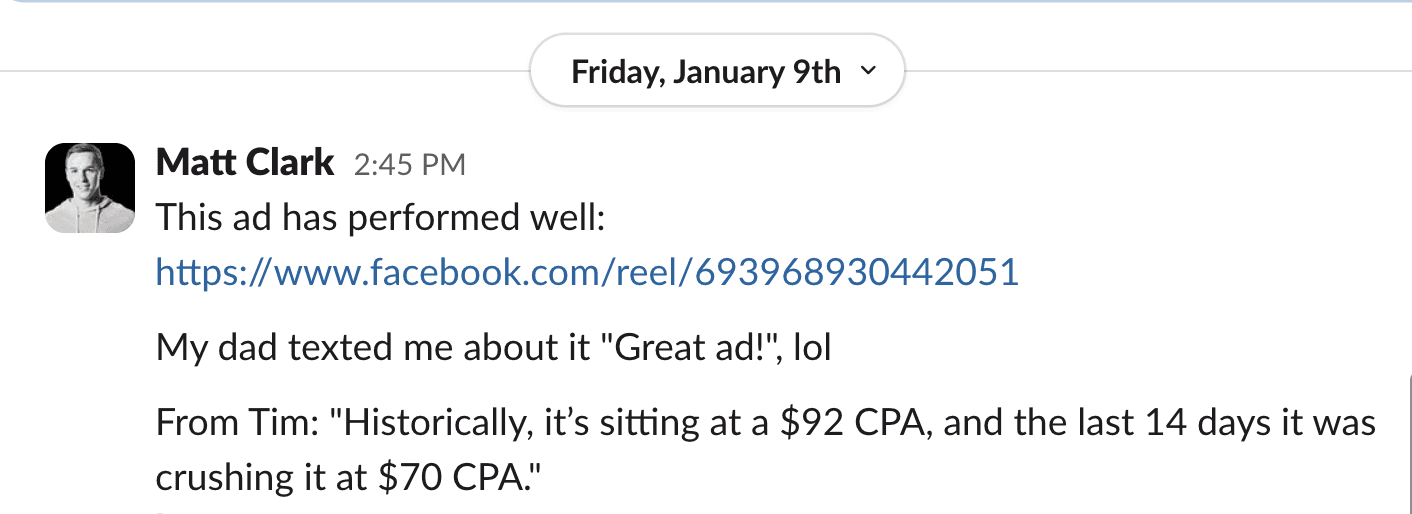
Across the full run, the ad delivered:
CTR: 4.75%
Account average: 2.68%
CPC: $0.49
Account average: $1.21
Total Page Engagements: 141,238
Highest in this engagement category within the account
Video Plays: 319,477
ThruPlays: 41,380
In ecommerce prospecting on Meta, CTR benchmarks typically fall between 0.9% and 1.8%, with 2% to 3% considered strong for cold audiences.
A 4.75% CTR in open targeting is not incremental lift. It is structural lift.
The CPC reinforces the same signal. At $0.49 compared to $1.21, this campaign reduced cost per click by 59 percent.
For operators, that difference compounds quickly.
Higher click-through rates improve delivery efficiency. Lower CPC creates margin for conversion volatility. When traffic costs less at the top of the funnel, downstream fluctuations become less punitive.
Engagement depth also matters. Over 319,000 video plays and more than 41,000 thruplays suggest the creative secured not just clicks, but sustained attention.
The Holiday Stress Test: December 23 – January 1
The strongest signal came during the most competitive acquisition window of the year.
Between December 23 and January 1, the campaign recorded a CPA of $49.86.
During that same period, the broader account average CPA was $79.16.
That represents a 37% lower CPA during peak holiday pressure.
Holiday competition amplifies inefficiencies. When creative underperforms in cold traffic during Q4, the cost impact becomes visible immediately.
Weak hooks inflate CPM pressure, unclear messaging increases bounce, and fatigue compounds under Q4 pressure.
In this case, the AI-generated creative remained a top performer during Christmas while targeting cold audiences and continues to run as of the time of this writing.
That suggests resilience, not novelty.
Reducing the Cost of Being Wrong
The performance matters but the production model matters just as much.
This creative was built in one afternoon.
The concept featured a wildlife photographer in a hot air balloon over the African savanna. In a traditional production workflow, that scenario would require location planning, travel, crew, logistics, and a budget impractical for most ecommerce brands.
Instead, it was conceived, generated, and deployed in a single afternoon.
That shift changes the risk profile of creative testing.
If the ad had failed:
One afternoon of internal work
A few hundred dollars in test spend
No sunk production cost
If it wins:
Scalable performance
Budget confidence
Cold acquisition resilience
When the cost of being wrong collapses and the upside of being right remains large, testing behavior changes. Creative becomes iterative instead of cautious.
Interpreting the Signal Carefully
Creative performance never exists in isolation. Audience dynamics, bidding strategies, landing page experience, offer strength, and testing discipline all contribute to outcomes.
A strong creative will not fix a weak product, a poor offer, or a broken funnel. However, relative lift under pressure is difficult to ignore.
This creative outperformed the account average on CTR, CPC, engagement volume, and holiday CPA while operating in open targeting with customers excluded. It sustained performance at meaningful spend and held efficiency during peak competition.
For founders who have experienced Q4 volatility, that matters.
What This Suggests About AI in Ecommerce Prospecting
AI-generated creative is often evaluated on aesthetics or speed of production. Those are visible benefits, but they are not operational proof.
Operational proof appears when creative:
Sustains performance relative to baseline
Competes in cold acquisition
Holds efficiency under competitive pressure
Justifies continued spend
In our first post, we argued that structure and judgment matter more than prompts.
When production becomes faster and less capital-intensive, brands gain more opportunities to surface high-performing angles. When those angles continue to perform in cold prospecting during Q4, the advantage compounds.
This is not about generating more ads. It is about reducing the cost of exploration while maintaining standards, because that distinction is where the real leverage lives.
What This Changes for Teams
AI-generated creative is often evaluated on speed or novelty. Those are surface-level benefits.
The deeper advantage is behavioral.
Teams that operate this way stop treating creative as a high-risk investment. They start treating it as a continuous input into performance. More angles get tested, more signals get generated, more winners get surfaced and over time, that compounds.
This is not just about generating more ads, it is about learning faster than the market.
Because in cold acquisition, the brands that win are not the ones with the best single idea, they are the ones that can find the next working idea before everyone else does.