What It Takes to Design AI Ads, Not Just Generate Them
A behind the scenes look at how we designed an AI generated ad with intention, judgment, and restraint. This post breaks down the creative thinking, decisions, and framework behind the headphones ad and explains why treating AI as a copilot, not an autopilot, changes what’s possible in modern creative work.

Most AI ads look impressive on the surface. They show motion, spectacle, and technical capability. What they often lack is intention.
They feel generated rather than designed, and viewers can sense that almost immediately.
The headphones ad that you are about to see was built differently. It was not driven by a checklist of features or a single perfect prompt. It came together through a series of creative decisions that treated AI as a collaborator rather than an autopilot.
Before reading further, watch the finished video. The rest of this post explains how we think about work like this and why that mindset matters.
We challenged our creative team to create an ad for a realistic product in a way that the average Kreator.ai user could replicate. Since the product didn’t exist, we would judge the ad on clarity, not performance.
This is how we judge whether an ad is worth testing:
After watching the ad once, can a viewer explain in their own words what the product does?
Does the viewer feel the problem before being presented with the solution?
Does the product feel credible?
Does the shot sequence make sense without explanation?
Creative arc of the ad
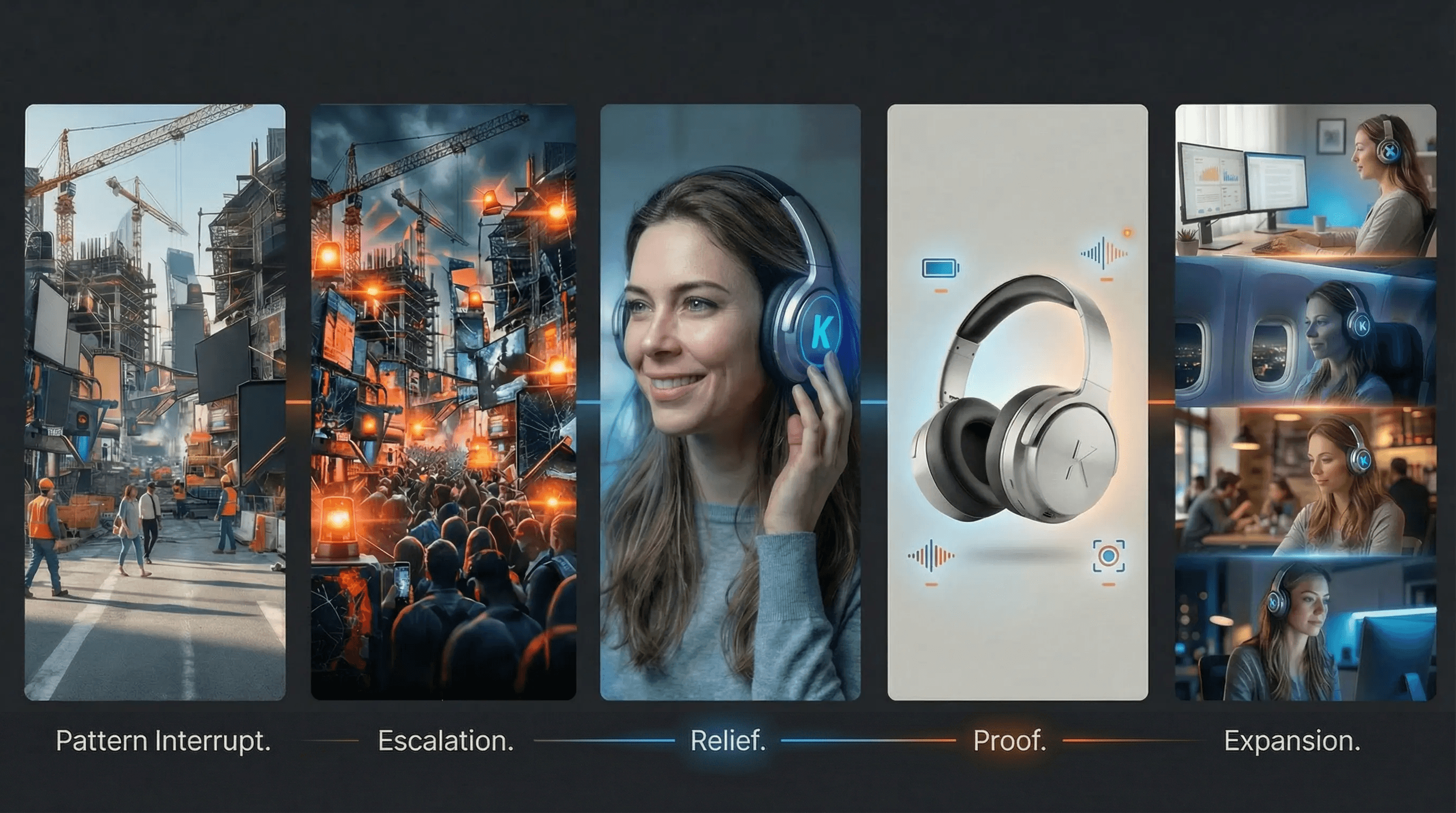
Pattern interrupt
Purpose: Break expectation immediately and force attention. The opening chaos is exaggerated on purpose so the viewer instantly recognizes overstimulation as the problem.
Escalation
Purpose: Make the problem undeniable. Multiplying the chaos increases discomfort and raises emotional stakes so the solution feels necessary, not optional.
Relief
Purpose: Deliver the payoff. The moment the headphones turn on, noise disappears instantly to let the viewer feel the benefit before it is explained.
Proof
Purpose: Anchor the feeling in credibility. Product shots and concrete claims translate emotional relief into something tangible and believable.
Expansion
Purpose: Generalize the promise. Showing the headphones across different environments reinforces that the benefit travels with the user, not just in one scenario.
The Starting Point Was the Product, Not the Tool

This ad did not begin with asking AI what to make. It began with a belief about what great headphones should do for people.
The idea was simple but specific. It was imperative to make the viewer feel the sharp contrast between everyday chaos and the calm the noise-cancelling headphones deliver.
These headphones were imagined as something that does more than block sound. They help regulate your mental state. They create focus. They reduce friction. They feel premium and intentional in both function and design.
AI helped explore how that idea could look and sound, but the idea itself existed first. That order matters. When tools lead the process, the result is usually generic. When a point of view leads, AI becomes a powerful accelerator instead of a replacement for thinking.
AI as a Collaborator

Once we had the idea dialed in and solid concept for the ad, we were able to quickly generate a large number of visual concepts that would ultimately make up the final cut. We were able to generate over two hundred variations across scenes, moods, and environments in order to find the right look and feel we were going for. Most were discarded. That volume of exploration is not practical and would have been cost-prohibitive in a traditional workflow.
From that same asset library, we produced three distinct ads.
One Production. Three Cuts.
Using only assets generated during the original production, we created additional versions of the ad without rendering new scenes.
Every frame across all three versions came from the same original asset library. What changed was structure, sequencing, and pacing.
From that single production, we built:
• A tighter cut that moves faster into tension and resolves more quickly
• A variation that reshapes the escalation and emotional arc
• The original landscape narrative version you just watched
The runtime differences are small. The strategic differences are not.
This is where AI becomes operational, not just experimental. When one exploration cycle produces multiple structurally distinct ads without new renders, creative becomes adaptable. Structure becomes a lever.
You can watch the alternate cuts here:

AI made exploration cost-effective. Our team’s judgment made it good.
One of the Strongest Visuals Came From an Earlier AI Mistake
The glowing “K” detail that appears in the ad did not originate during this project. It came from a completely different video created months earlier, where the AI introduced it on its own without being prompted.
At the time, it stood out as interesting but unnecessary. It was not forced into that earlier video, but it was remembered.
When this headphones concept came together, that visual accident suddenly made sense. What started as an unexpected output became a deliberate design choice.
The Opening Scene Changed When the Emotion Was Wrong
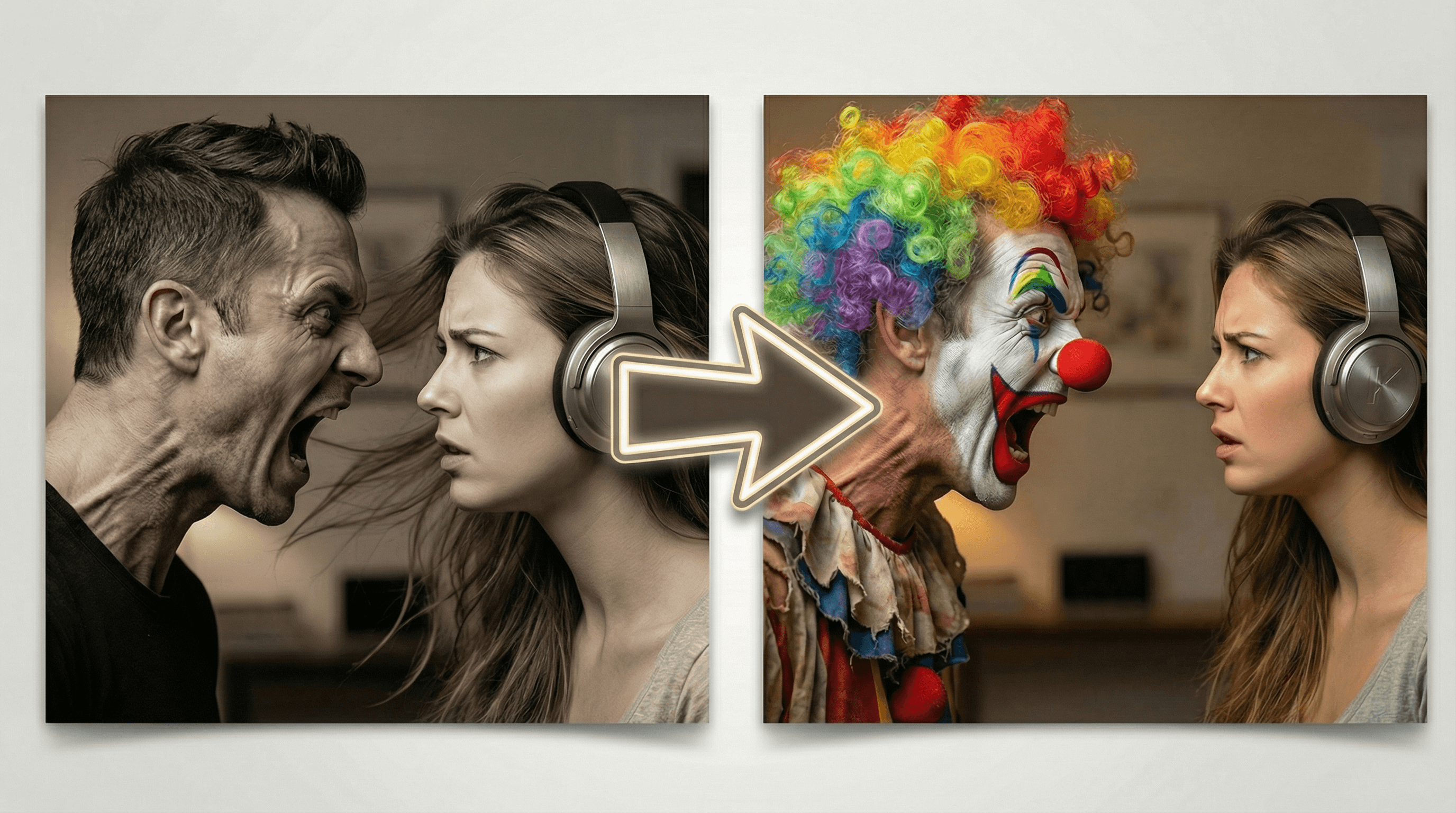
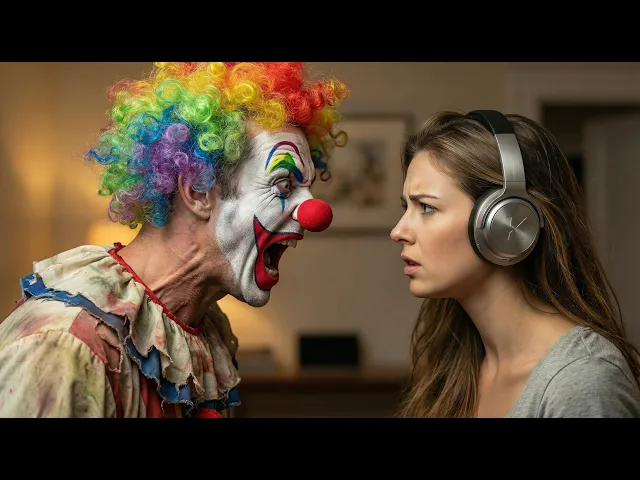
An early version of the ad opened with an angry man yelling. It communicated noise and stress, but it also introduced a tone that felt uncomfortable and distracting.
That forced a reset.
The solution was not to soften the moment, but to exaggerate it in a safer direction. Replacing the man with a clown kept the chaos while removing the real-world implications. A screaming clown is intense, absurd, and immediately attention-grabbing without crossing into something viewers reject instinctively.
The escalation from one clown to four pushed that discomfort further in a way that felt surreal rather than threatening.
Choosing What Felt Right Over What Looked Correct
Not every generated clip matched the original vision. Some were strange. Some were imperfect. One of the most unusual clips almost did not make the final cut.
It stayed because it was memorable.
AI often produces outputs that technically miss the brief but emotionally land in a more interesting place. That choice was about judgment, not generation.
What This Ad Actually Represents
This video is not meant to be a showcase of every feature or capability. It is a byproduct of how Kreator.ai is designed to work.
In a traditional workflow, exploration is time-consuming, risky, and expensive. Time and money are spent on slow approvals, limited iterations, and convincing stakeholders before real learning ever happens.
By contrast, AI speeds up exploration, iteration, and production.
Creative judgment still determines what survives. The real leverage comes from knowing what to keep, what to cut, and what to reinterpret when something surprising shows up.
That philosophy is built into Kreator.ai from the start.
What This Tells Us About AI Creative
This exercise showed us that Kreator.ai can be used as a collaborator to empower creative teams to produce amazing-looking ads in a fraction of the time and cost compared to traditional workflows.
In our next blog post we will show you how an 8-figure brand used Kreator.ai to create an ad that got nearly 2X CTR over more than 300,000 video plays.
We will break down what worked, what did not, and why the results mattered.
Stay tuned!