The Growth Marketer’s Guide to Video Ad Anatomy
Master the 3-part performance video ad anatomy—Hook, Body, and CTA—with this modular creative testing system designed to stop creative fatigue, optimize paid social metrics, and scale your ad spend predictably.

Most growth marketing teams burn up to 50% of their creative budget rebuilding ads that aren’t actually broken.
It’s a familiar cycle: Performance slips, click-through rates (CTR) drop, and a Slack channel declares the creative "fatigued." Before long, the team is back at square one discussing entirely new concepts, writing scripts, and kicking off a costly, multi-week production timeline.
The highest-performing brands rarely work this way.
Instead of treating digital video ads as fixed, monolithic files, they treat them as modular systems. Every creative asset for Meta (Facebook, Instagram), TikTok, and YouTube ads is broken into three distinct, interchangeable components: The Hook, The Body, and the CTA.
When you understand the exact anatomy of a performance ad, you stop guessing why your paid social campaigns succeed or fail. You can isolate the exact creative bottleneck, swap out the broken module, and revive a "dead" ad with mathematical precision.
Here is the definitive blueprint to mastering performance video ad anatomy, maximizing your creative velocity, and scaling your ad spend systematically.
The Quick-Reference Performance Ad Blueprint
Before diving into the technical specifications of each module, use this matrix to map your creative components directly to your performance metrics:
Video Module | Core Platform Metric | Primary Operational Job | What Failure Looks Like |
|---|---|---|---|
Module 1: The Hook | 3-Second Hook Rate (3s Views / Imp) | Disrupt user behavior; stop the scroll. | High impressions, but users scroll past instantly. Low Hook Rate. |
Module 2: The Body | Hold Rate / Video Retention at 50% | Build belief; agitate problem; prove value. | High Hook Rate, but a steep vertical drop-off in watch time. |
Module 3: The CTA | Outbound CTR & Link Clicks | Direct user momentum; clear next step. | High average watch time, but zero traffic moving to the landing page. |
Module 1: The Hook (0:00 – 0:03)

Primary Job: Disrupt user behavior and earn attention. Key Metric: 3-Second Video Play Rate (Hook Rate)
The hook has exactly one responsibility: stop the scroll. It shouldn't try to sell your product, explain your software's pricing, or cram your entire brand backstory into the opening frames. Its sole purpose is to buy the next three seconds of attention.
High-Converting Hook Frameworks to Test:
The Problem State Visual: Show the core frustration immediately. If you're solving a messy workflow, start with a high-speed screen recording of a chaotic, unorganized desktop.
The Text-Overlay Pattern Interrupt: Use bold, contrasting text overlays that challenge status-quo thinking (e.g., "Stop writing copy from scratch").
The "Us vs. Them" Split Screen: A side-by-side visual comparing the slow, painful traditional method with your fast, seamless solution.
The UGC Dopamine Hit: A creator speaking directly to the camera, opening with an emotionally charged or highly relatable statement.
Module 2: The Body (0:03 – End Card)
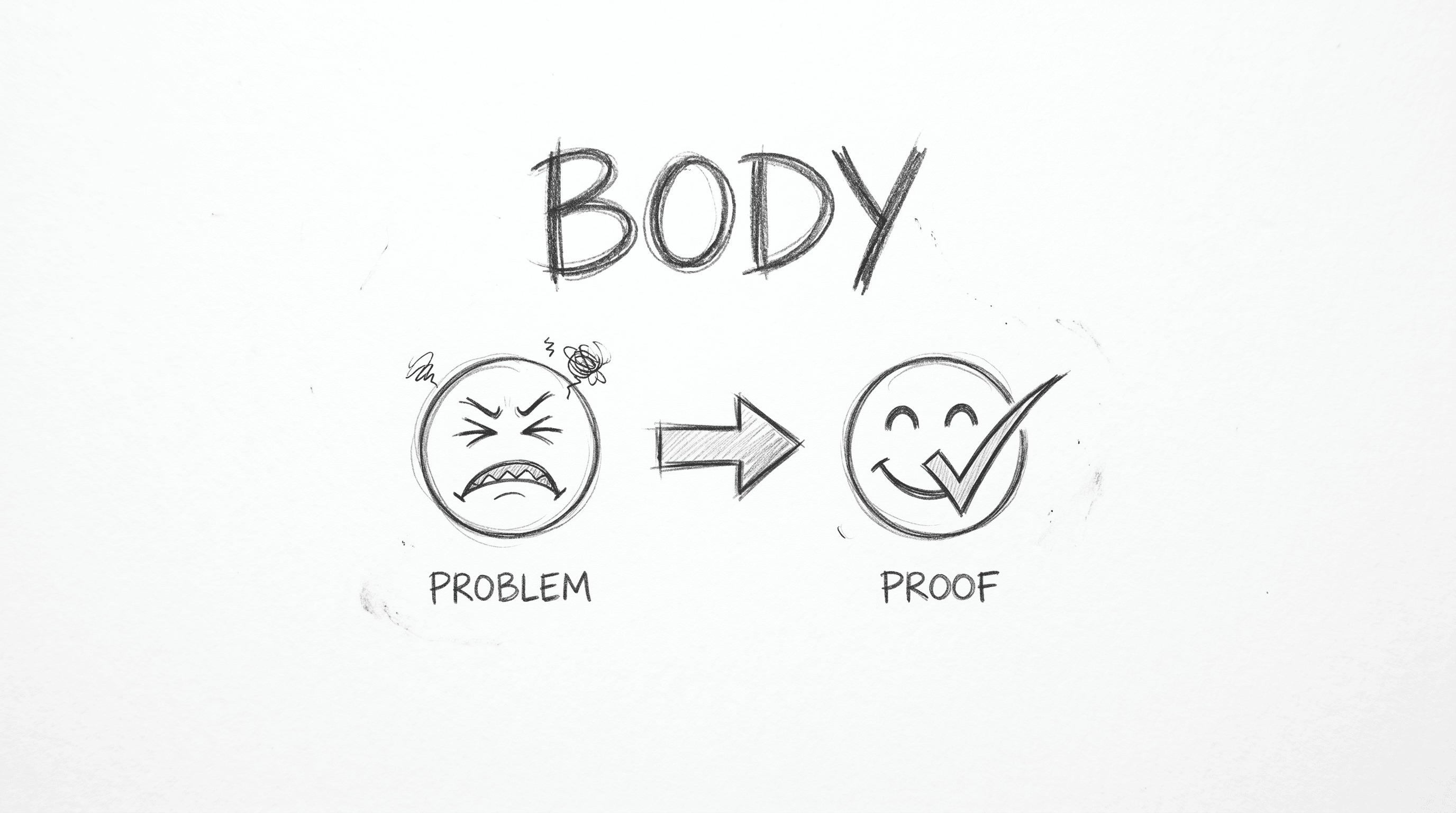
Primary Job: Build belief and address consumer skepticism. Key Metric: Hold Rate, Video Retention, and 50%+ Video Playback
Once your hook earns attention, the Body must answer the viewer's immediate internal objection: "Why should I care?"
This is where the heavy lifting of persuasion happens. While many growth teams hyper-fixate on testing 50 different hooks, they let the middle of their videos meander. To drive sustained engagement and high video retention rates, a world-class ad body must execute three strict phases:
1. Agitate a Recognizable Problem
Before you can pitch a solution, you must validate the consumer's friction. The best video ads make the problem visually resonant. Don't just say a task is "time-consuming", show a visual time-lapse of a clock ticking away while someone manually cuts and pastes data between windows. When a viewer sees their daily reality reflected on screen, they feel understood.
2. Demonstrate the Transformation
People don't buy product features; they buy a better version of themselves. This is where technical ad concepts often lose momentum by listing feature bullet points instead of showing real outcomes. Keep it visual. Use clean screen recordings, dynamic UI animations, or direct product demonstrations that highlight a process becoming cleaner, simpler, and completely effortless.
3. Stack Inarguable Social Proof
Even if a user relates to the problem and loves the transformation, their brain is hardwired for skepticism: "Will this actually work for someone in my industry?" You must de-risk the purchasing decision right inside the body of the ad.
Embed rapid-fire customer review overlays.
Show screenshots of verified data dashboards or case study metrics.
Incorporate User-Generated Content (UGC) snippets of real customers speaking to their authentic experiences.
Module 3: The CTA (The Final 3–5 Seconds)
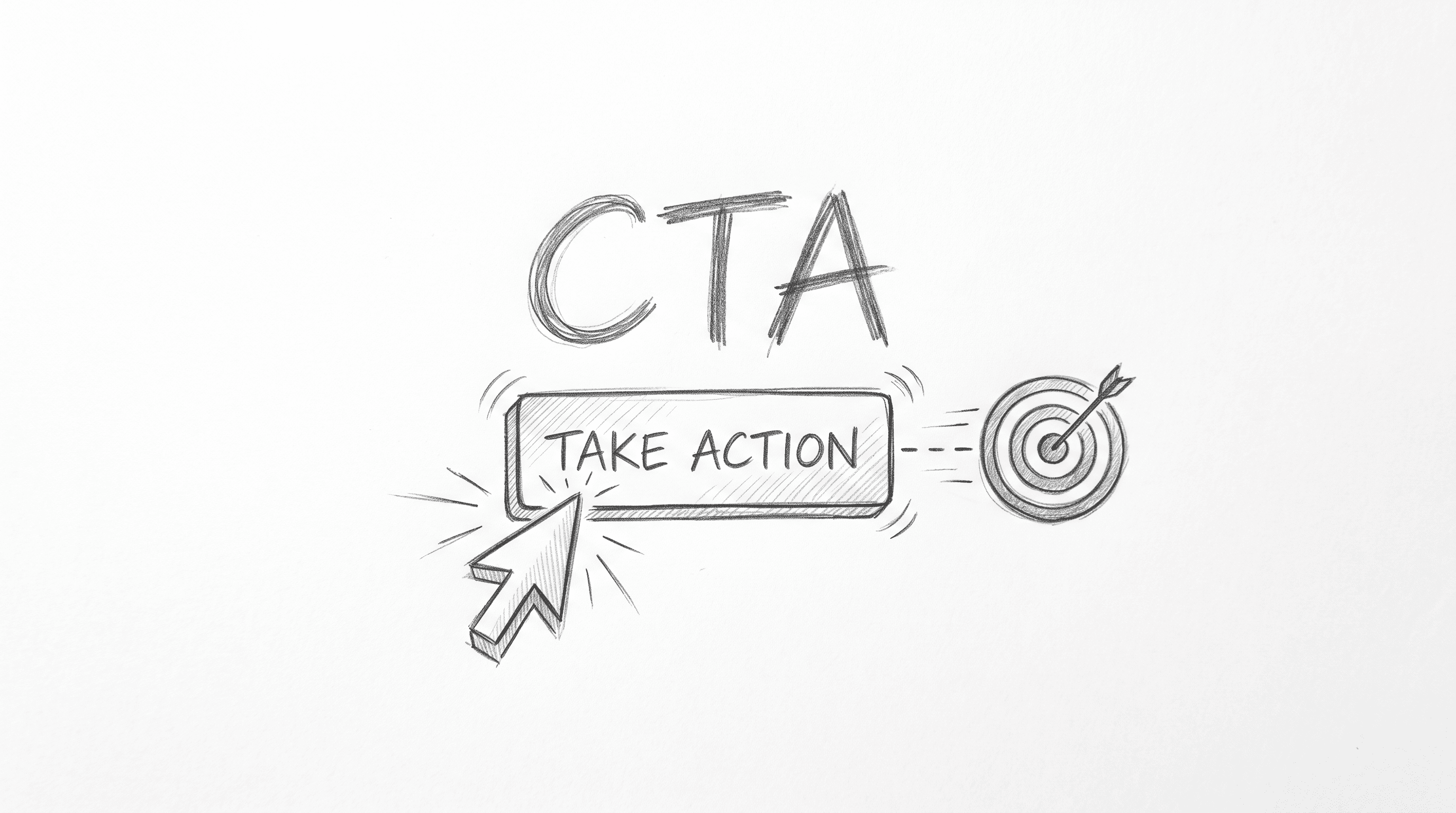
Primary Job: Direct user momentum and eliminate friction. Key Metric: Outbound Click-Through Rate (CTR) and Conversion Rate
Performance marketing teams spend a disproportionate amount of time debating micro-copy variations for their end cards. "Learn More" versus "Get Started." "Book A Demo" versus "See It In Action."
While clear, action-oriented copy matters, a low-converting Call to Action (CTA) is rarely a typography issue, it is almost always a symptom of an unconvincing Body module.
If your ad successfully surfaces a painful problem, demonstrates a clear transformation, and proves it with credible evidence, the next step should feel like a completely obvious conclusion. The CTA doesn't need to do any heavy emotional lifting; it simply acts as a low-friction signpost directing the user's existing momentum.
Best Practices for Performance CTAs:
Keep end cards clean, minimalist, and completely free of distracting background visuals.
Match your verbal CTA directly to your landing page offer (if the ad promises a demo, the CTA must say "Book a Demo," not "Shop Now").
Utilize simple, high-contrast visual cues (like a clean button graphic) to make the next step unambiguous.
How Modular Testing Builds Creative Flywheels
The Hook-Body-CTA framework is more than just a creative template; it is a diagnostic data ecosystem. When you view your video ads through this anatomical lens, you stop guessing why a creative angle failed and start executing iterations based on mathematical bottlenecks:
Symptom: Low Hook Rate, High Retention. (People scroll past, but the few who stop watch the whole video). The Fix: Keep the Body and CTA exactly as they are. Shoot 3 new 3-second openings and stitch them onto the existing video file.
Symptom: High Hook Rate, Sharp Mid-Video Drop-off. (The opening grabbed them, but they lost interest quickly). The Fix: Your hook worked, but your Body failed to build belief. Keep the hook, rewrite the problem/transformation section, and re-test.
Symptom: High Watch Time, Low Outbound CTR. (Users watch the entire ad but refuse to click through). The Fix: The Hook and Body crushed it, but your CTA failed to direct the momentum. Swap out the final 5 seconds with a more compelling offer, urgency element, or clearer incentive.
The goal of scaling paid media on modern ad platforms isn't to create more ad concepts from scratch. The goal is to build a highly repeatable, modular system where every single creative iteration makes your data smarter, your production faster, and your ad spend significantly more profitable.