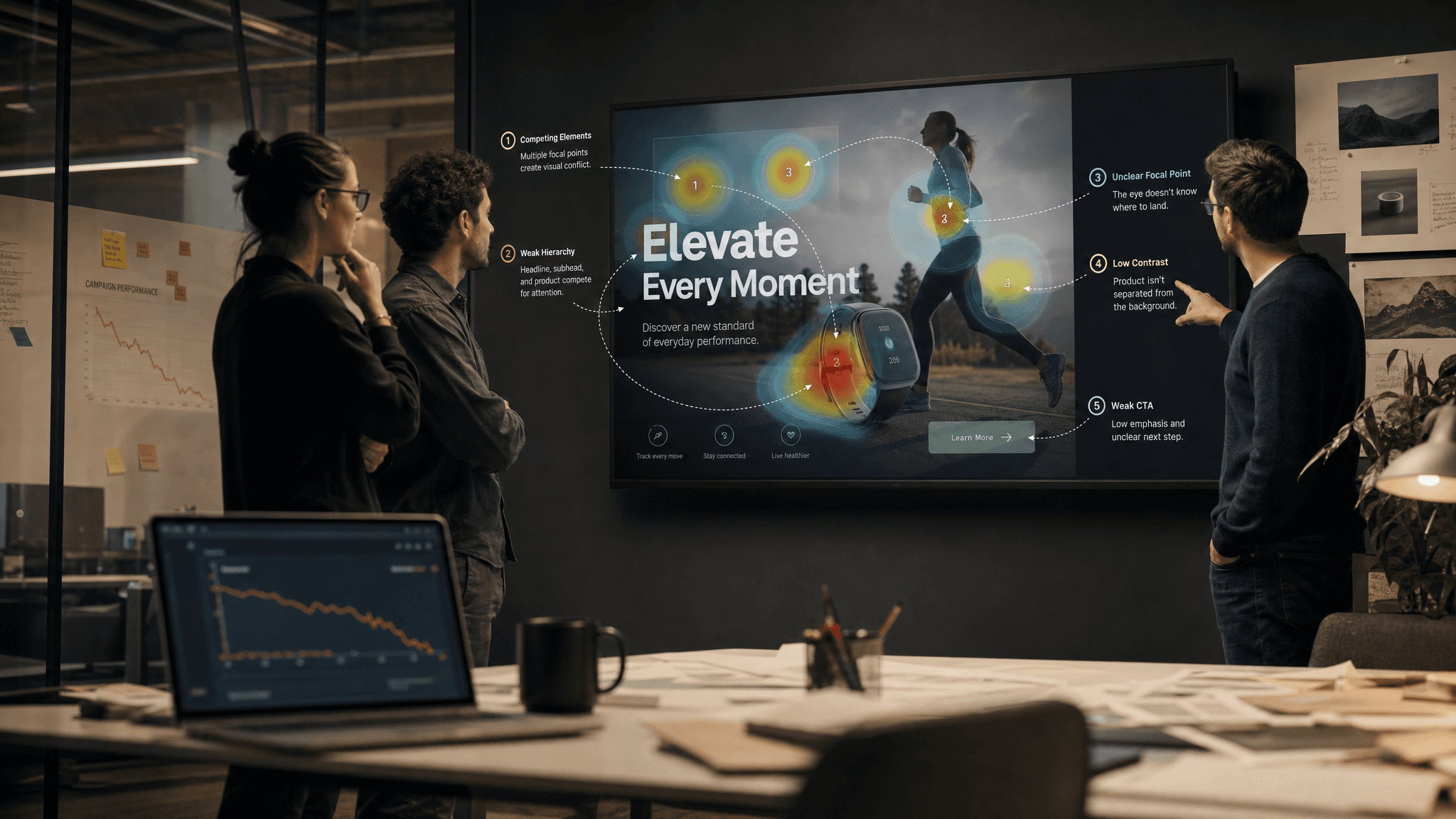
Master Your First 3 Seconds: The Kreator Hook Playbook
Learn why the first 3 seconds determine video performance, discover proven hook strategies, and see how AI-powered creative testing helps creators and marketers improve retention, engagement, and content growth faster.

Most creators spend the majority of their creative energy on the middle of the video.
They refine the concept demonstration, they debate the talking points, they rewrite the call to action. They obsess over transitions, audio tracks, and visual polish.
Meanwhile, the audience has already made its decision.
On platforms like Instagram, TikTok, YouTube Shorts, and LinkedIn, viewers move through feeds incredibly quickly. If the opening fails to create immediate interest, relevance, or curiosity, nothing that follows gets a chance to work.
The challenge for modern content engines is no longer understanding that the first three seconds matter it is understanding how to consistently generate and test better openings without turning video editing into your biggest operational bottleneck.
What Actually Happens In The First Three Seconds?
Before a viewer evaluates your unique value, your personality, or your offer, they're making a much simpler decision:
Is this worth my attention?
That decision happens remarkably fast. Viewers are subconsciously evaluating three things:
Viewer Question | What They're Really Looking For |
|---|---|
Is this for me? | Relevance |
Is this interesting? | Curiosity |
Is this worth my time? | Value |
If your opening fails any one of those tests, the scroll continues.
This is why so many otherwise excellent videos underperform. The problem isn't the core concept. Sometimes the best part of your video simply arrives too late.
The Biggest Mistake Content Teams Make
The most common mistake is treating the opening frames as an introduction.
The first few seconds become:
A graphic logo animation
A slow branding reveal
Cinematic, quiet b-roll
"Hey guys, welcome back to my channel..."
The problem is that audiences aren't waiting for the story to start. They're deciding whether the story deserves their time.
The first three seconds are not the introduction to your video, they're the audition for the rest of your video.
Four Hook Strategies That Consistently Work
Great hooks don't all look the same, but high-performing openings tend to fall into a few predictable categories.
1. Immediate Problem Recognition
The viewer instantly recognizes a challenge they're actively experiencing.
Example: "Still spending three hours editing a 30-second Short?"
Why it works: It filters in a highly qualified, problem-aware audience immediately.
2. Fast Proof
Instead of making a claim, you show evidence in frame one.
Example: Leading with final metrics, a dramatic transformation, or the finished product.
Why it works: Proof lowers skepticism and earns attention through instant credibility.
3. Pattern Interrupt
A surprising visual, unexpected camera movement, or unusual setting that breaks autopilot scrolling.
Why it works: Essential in crowded niches (like fitness, lifestyle, or tech) where most creator content looks identical.
4. Curiosity With A Fast Payoff
A strong question or unresolved statement that creates immediate psychological tension.
The Rule: Deliver on the promise quickly. Curiosity works; bait-and-switch kills channel trust.
5. UGC Realism
An authentic opener that sounds like a real admission, not an ad voiceover
Why it Works: The viewer can relate to a real person sharing an experience or condition.
The 3-Layer Hook Framework
One of the biggest misconceptions in video production is that hooks are purely a copywriting problem. They're not. High-performing openings work because multiple elements reinforce each other simultaneously.
Layer | Purpose |
|---|---|
Visual | Stops the scroll |
Text | Provides immediate context |
Audio | Amplifies attention and pacing |
When these layers align, the viewer understands the message instantly. When they conflict, retention drops.
Hook Creation Checklist
Whether it's during your iteration process or before launching your creative, test your first 3 seconds against this operational checklist:
Is the value obvious fast? Can a cold viewer tell exactly what problem, niche, or outcome is being teased in frame one?
Does the opening move? Static frames and talking heads with zero momentum underperform when the feed around them is full of motion.
Can it work muted? Your text overlays, physical props, and visual framing must carry the entire narrative hook without relying on audio.
Is the first cut clean? Muddy, delayed edits or fractions of a second of dead air weaken the thumb-stop, even if the concept is right.
Is your brand identity present early? Your unique style, face, product interface, or content universe needs to appear fast enough to anchor the viewer.
Does the video body fulfill the promise? A great hook cannot overpromise and then let the pacing drift in the middle.
Did you write alternates? One hook is just an opinion. Multiple hooks are a legitimate testing plan.
Hook writing gets drastically better the moment production teams stop protecting individual ideas and start producing options.
How To Diagnose A Retention Problem

Too many creators react emotionally to low views. Instead, use your retention curves as clinical diagnostic tools. The goal isn't to create a perfect video. The goal is to identify exactly where performance breaks down.
Performance Signal | Likely Cause | Next Move |
|---|---|---|
Strong opening, sharp drop after 3-5s | Hook overpromised or click-baited. | Improve the transition into the video body. |
Low thumb-stop, strong completion rate | Excellent video trapped behind a boring intro. | Keep the body; replace the first 3 seconds entirely. |
Strong watch time, low conversions/actions | Content engages but doesn't persuade. | Rework your value presentation and CTA. |
High views, low follower growth | Hook is attracting broad, shallow curiosity. | Increase your audience and niche specificity. |
Why AI Changes the Creative Workflow
Historically, changing a hook was an expensive operational drag. A new opening required searching through raw footage, re-editing timelines, updating captions, and running new exports.
Today, that constraint is gone. With platforms like Kreator, you can generate multiple opening concepts, test different visual directions, experiment with hyper-targeted messaging, and swap hook variations without rebuilding your entire project from scratch.
The conversation shifts from:
"What's the perfect hook?"
to:
"Which hooks are we testing today?"
Stop Rebuilding Videos From Scratch
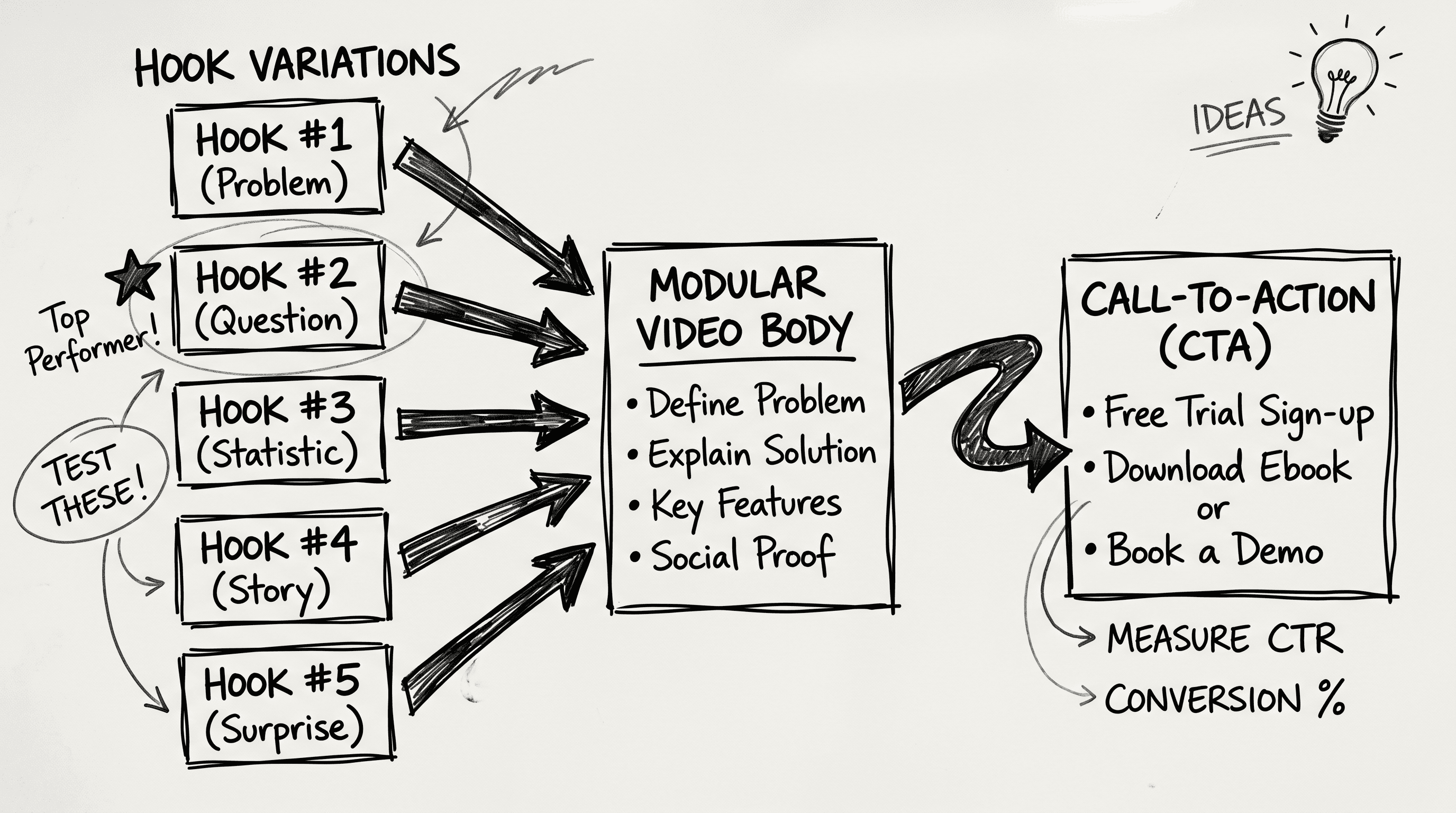
The most effective way to scale a content business is to treat videos as modular assets. Stop viewing every project as a single, rigid block of film. Break it into three components:
Component | Purpose |
|---|---|
Hook | Capture attention |
Body | Deliver value |
CTA | Drive action |
This allows you to test three or four distinct openings against the exact same video body. Rather than rebuilding the asset, you only swap the component you're trying to optimize. The result is faster channel growth and zero editing burnout.
The New Competitive Advantage: Learning Velocity
For years, production volume was the bottleneck. You needed more editors, bigger budgets, and more hours.
As AI steadily reduces those constraints, a new bottleneck emerges: Learning.
The creators who win are not necessarily the ones making the most content. They're the ones learning the fastest. Every hook becomes a hypothesis. Every variation becomes an audience test. Every upload reveals something about viewer psychology.
The first three seconds have always dictated success. What's changed is how fast you can experiment with them. The top brands and creators of the next decade won't just produce the most assets—they will turn those first three seconds into actionable audience insight faster than everyone else.